

Immune Modulation Research Peptides
The field of immune modulation research investigates the intricate mechanisms by which endogenous and exogenous molecules, particularly peptides, alter immune system activity. This area is critical to fundamental science as the immune system represents a complex network of cellular and molecular interactions responsible for host defense, tissue homeostasis, and surveillance. Peptides, acting as highly specific signaling molecules, provide researchers with powerful tools to probe these pathways. By functioning as agonists, antagonists, or allosteric modulators of key receptors, they allow for the precise dissection of signaling cascades involved in both innate and adaptive immunity. The scientific literature is rich with studies using research peptides to elucidate the roles of specific cytokines, T-cell subsets, and inflammatory mediators in various preclinical models. This foundational knowledge, generated exclusively for Research Use Only (RUO), is essential for understanding the biochemical underpinnings of immune function and dysregulation, paving the way for future investigations into complex biological processes.
Peptides in this research area
Research Overview
A central focus of immune modulation research is the elucidation of key biological pathways and receptors. The Nuclear Factor-kappa B (NF-κB) pathway is paramount, serving as a master regulator of inflammatory gene expression in response to stimuli like pathogen-associated molecular patterns (PAMPs) and pro-inflammatory cytokines such as TNF-α and IL-1β. Peptides are often investigated for their capacity to inhibit or activate IκB kinase (IKK), thereby controlling NF-κB nuclear translocation. Another critical signaling axis is the Janus kinase/signal transducer and activator of transcription (JAK-STAT) pathway, which transduces signals from a vast array of cytokine and growth factor receptors. Investigational peptides may be designed to interfere with cytokine-receptor binding or the subsequent phosphorylation events mediated by JAKs, allowing researchers to study the specific contributions of cytokines like IL-6 or interferons. Toll-like receptors (TLRs), key pattern recognition receptors of the innate immune system, are also frequent targets. For instance, synthetic peptides mimicking or blocking TLR ligands are used to study the initiation of innate immune responses.
Preclinical investigation of these peptides relies on a tiered system of experimental models. *In vitro* studies form the foundation, utilizing primary immune cell cultures such as T-lymphocytes, macrophages, and dendritic cells isolated from murine or other non-human sources. In these controlled environments, researchers can quantify specific effects on cell proliferation, differentiation (e.g., Th1/Th2/Th17 polarization), and function. Assays like ELISA and Luminex are employed to measure cytokine secretion (e.g., IL-10, IFN-γ), while flow cytometry is used to analyze cell surface markers and intracellular signaling protein phosphorylation. More complex organoid or co-culture systems are increasingly used to model cell-cell interactions. For systemic evaluation, *in vivo* animal models are indispensable. Common examples include lipopolysaccharide (LPS)-induced endotoxemia to study acute inflammation, collagen-induced arthritis (CIA) as a model for rheumatoid arthritis, and experimental autoimmune encephalomyelitis (EAE) for multiple sclerosis research. These models, strictly for non-human laboratory investigation, allow for the assessment of a peptide's effect on complex physiological and pathological processes.
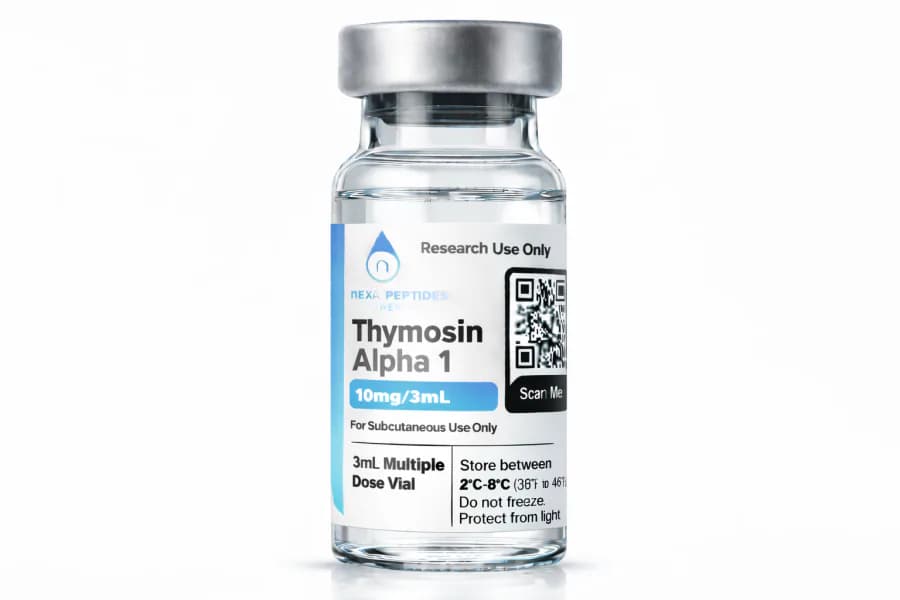
Several categories of peptides are prominent in immune modulation research. Thymic peptides, such as Thymosin Alpha-1 and Thymulin, are studied for their roles in T-cell development and maturation within the thymus and periphery. Research protocols often investigate their ability to restore T-cell counts or modulate cytokine profiles in models of immunodeficiency. Another class includes antimicrobial peptides (AMPs) with immunomodulatory properties, like LL-37. Beyond direct microbicidal activity, LL-37 is investigated for its ability to modulate inflammatory responses through interactions with TLRs and G protein-coupled receptors, affecting chemokine production and immune cell recruitment. Certain synthetic peptide fragments, such as BPC-157, are a major focus of investigation. While its precise mechanism of action remains an area of active research, studies explore its effects on angiogenesis, nitric oxide synthesis, and the expression of various growth factors and cytokines in models of tissue injury and inflammation. Finally, rationally designed peptide antagonists for chemokine receptors, like CXCR4 or CCR5, are used to probe the role of cell trafficking in inflammatory and autoimmune models.
Despite significant progress, several open questions drive the field forward. A primary challenge is achieving high target specificity to minimize off-target effects. The pleiotropic nature of many immune receptors means that modulating one can have unforeseen consequences on other signaling networks. Consequently, there is a strong focus on designing peptides with improved receptor selectivity and affinity. Another major hurdle is peptide stability and delivery in *in vivo* models. The short plasma half-life of many peptides necessitates research into chemical modifications, such as pegylation or incorporation of non-natural amino acids, and advanced delivery systems like nanoparticles to improve pharmacokinetic profiles for experimental purposes. Furthermore, a significant gap often exists between *in vitro* potency and *in vivo* efficacy, highlighting the complexity of systemic immune responses. Fully elucidating the complete molecular mechanisms for many investigational peptides, including identifying their primary receptors and downstream signaling networks, remains a fundamental objective for researchers in the field.