

Longevity Research Peptides
Longevity research investigates the fundamental molecular and cellular mechanisms that drive the aging process. This field is critical to the scientific community as it aims to understand the biological basis of age-related functional decline and the onset of chronic diseases. The core objective is not to extend lifespan indefinitely, but to elucidate the pathways governing healthspan—the period of life spent in good health. Peptides have emerged as indispensable tools in this area of inquiry. Due to their high specificity and ability to modulate protein-protein interactions, they allow researchers to precisely target key signaling nodes implicated in aging, such as metabolic regulators, immune function, and cellular senescence. By using these molecules in controlled, preclinical models, investigators can dissect complex biological cascades and identify potential points of intervention. All research conducted with these compounds is for laboratory, research use only and is not intended for therapeutic or diagnostic applications.
Peptides in this research area






Research Overview
The study of longevity and aging is anchored in several highly conserved biological pathways. The Insulin/IGF-1 Signaling (IIS) pathway is a cornerstone of this research; its downregulation has been robustly linked to extended lifespan in model organisms from yeast to rodents, primarily through the activation of stress-resistance transcription factors like FOXO. Another central regulator is the mechanistic Target of Rapamycin (mTOR) pathway, which integrates nutrient signals to control cell growth, proliferation, and autophagy. Pharmacological inhibition of mTOR is one of the most well-validated interventions for extending lifespan in preclinical models. Concurrently, research into sirtuins, a class of NAD+-dependent deacetylases, is paramount. Sirtuins regulate genomic stability, DNA repair, and metabolic efficiency, and their activity is intrinsically linked to cellular NAD+ levels, which are observed to decline with age. Finally, the process of cellular senescence—a state of irreversible cell cycle arrest coupled with a pro-inflammatory secretome (SASP)—is a key target. The selective clearance of senescent cells using 'senolytic' agents is an active area of investigation.
To probe these complex pathways, researchers employ a range of preclinical models. In vitro studies often utilize primary cell cultures, such as human fibroblasts or endothelial cells, to examine mechanisms of cellular senescence, DNA damage response, and mitochondrial function. For in vivo studies, short-lived invertebrate models like the nematode *Caenorhabditis elegans* and the fruit fly *Drosophila melanogaster* are invaluable for high-throughput genetic and pharmacological screens due to their rapid life cycles. In vertebrate research, the mouse (*Mus musculus*) is the predominant model. Genetically engineered strains, such as dwarf mice with deficiencies in the growth hormone (GH) axis, have provided profound insights into the link between growth signaling and longevity. These mammalian models permit detailed physiological, metabolic, and histopathological analyses that are more directly translatable to human biology.
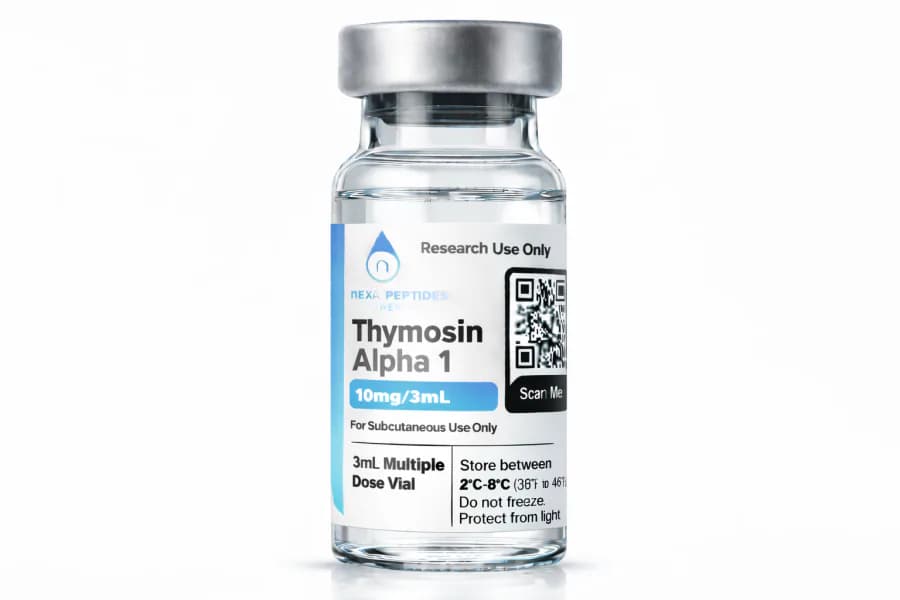
Several categories of research peptides are utilized to modulate these systems. Analogs and antagonists of the Growth Hormone-Releasing Hormone (GHRH)/GH axis, such as modified GHRH(1-29) analogs or synthetic ghrelin receptor agonists like Ipamorelin, are used to study the effects of attenuated growth signaling on healthspan and lifespan in animal models. Mitochondrially-targeted peptides, exemplified by SS-31, are designed to accumulate within mitochondria to buffer against oxidative stress and restore mitochondrial function, addressing a core hallmark of aging. Peptides are also being investigated for their immunomodulatory potential, with thymic peptides like Thymosin Alpha-1 and Thymosin Beta-4 being studied in the context of immunosenescence, the age-related decline in immune system efficacy. More recently, senolytic peptides, such as those derived from the FOXO4 protein, have been developed to selectively induce apoptosis in senescent cells, providing a powerful tool to study the causal role of senescence in age-related pathology.
Despite significant progress, many open questions remain. A primary challenge is ensuring the target specificity of peptide interventions and understanding potential off-target effects within a complex biological system. The translational gap between findings in short-lived model organisms and the complexities of primate aging requires careful consideration and the development of more predictive models. Furthermore, the field is actively seeking more robust and reliable biomarkers of biological aging—so-called 'aging clocks'—to accurately measure the efficacy of an intervention in a preclinical setting without waiting for the entire lifespan of the organism. Finally, researchers are exploring whether combinatorial approaches, targeting multiple hallmarks of aging simultaneously (e.g., clearing senescent cells while also boosting mitochondrial function), may yield synergistic effects and prove more effective than single-pathway modulation. These questions define the cutting edge of longevity research.