
Cognitive
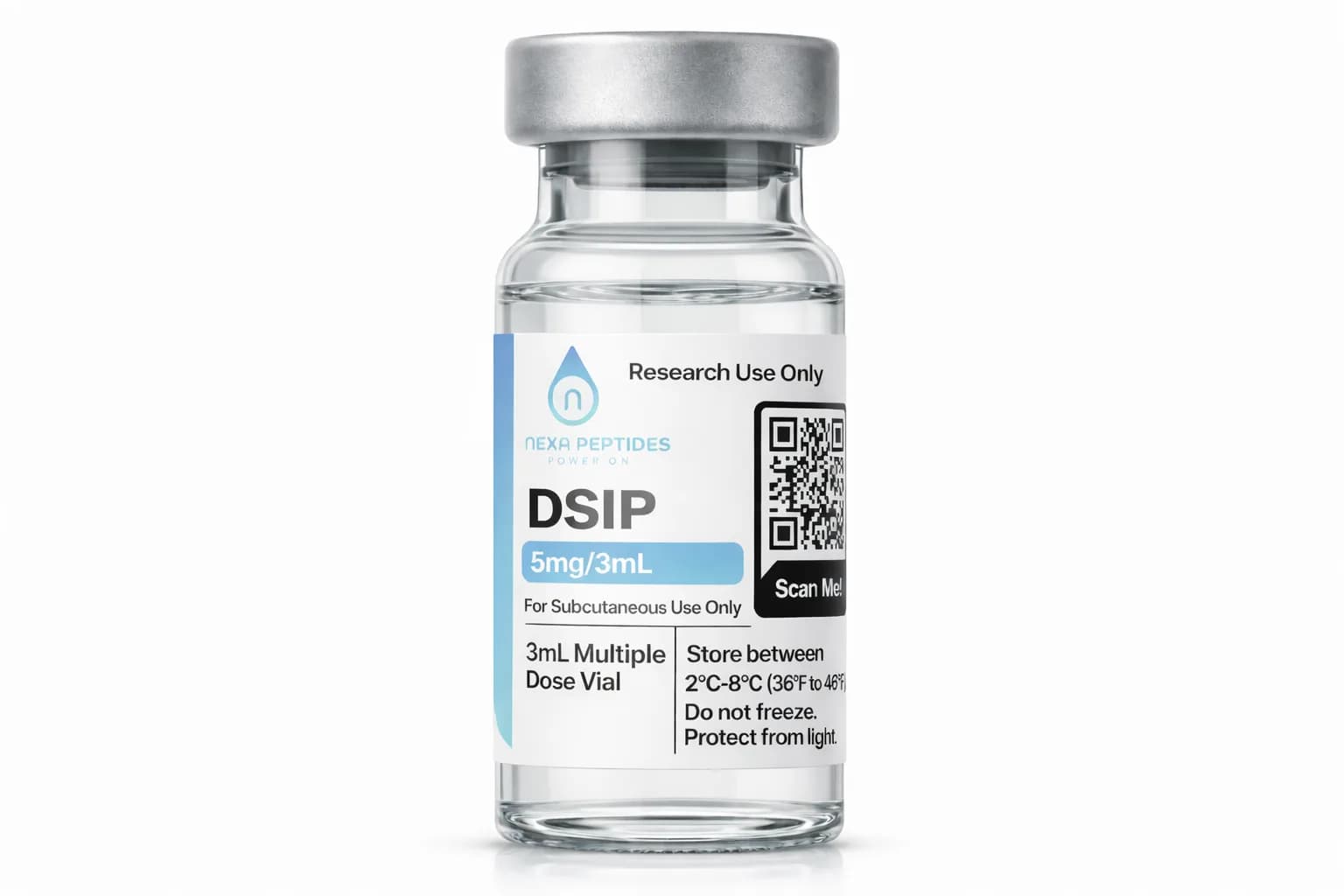
DSIP (Delta Sleep-Inducing Peptide) — DSIP 5MG
SKU: NXP-DSIP-05
Delta-sleep-inducing peptide (DSIP) is a neuropeptide that plays a role in regulating various physiological and endocrine functions within the central nervous system. Researchers are particularly interested in its potential to reduce oxidative stress and support healthy heart function by stabilizing myocardial contractility. Additionally, DSIP is being explored for its possible applications in addressing major depressive disorder. For Research Use Only
Product Details
DSIP 5MG (Delta-Sleep-Inducing Peptide) is a synthetic neuropeptide studied for its potential role in regulating sleep, reducing oxidative stress, and supporting various physiological processes within the central nervous system. Research suggests that DSIP may influence stress response, hormonal balance, and cardiovascular function by stabilizing myocardial contractility. It is also being explored for its potential applications in mood regulation and neuroprotection. DSIP 5MG is commonly used in controlled laboratory settings to study its effects on sleep cycles, metabolic processes, and overall neuroendocrine activity.
For Research Use Only
About DSIP (Delta Sleep-Inducing Peptide)
DSIP (Delta Sleep-Inducing Peptide) is an endogenous nonapeptide neuromodulator first isolated from the cerebral venous blood of rabbits in a state of delta-wave electroencephalogram (EEG) sleep. Its unique discovery and pleiotropic physiological activities have made it a subject of significant interest in neurobiology, endocrinology, and stress physiology research. The primary amino acid sequence of DSIP is Trp-Ala-Gly-Gly-Asp-Ala-Ser-Gly-Glu. With a molecular weight of approximately 848.81 g/mol, this amphiphilic peptide is notable for its ability to cross the blood-brain barrier, a critical feature for centrally acting research compounds.
Initially characterized for its ability to promote slow-wave sleep (SWS) in various animal models, subsequent research has revealed a much broader spectrum of activity. Laboratory investigations suggest DSIP functions as a stress-limiting or adaptogenic substance, capable of modulating the hypothalamic-pituitary-adrenal (HPA) axis and mitigating the physiological consequences of acute and chronic stress. Its effects appear to be highly dependent on the physiological state of the research subject, often exhibiting normalizing actions rather than direct agonism or antagonism at a single receptor type. This context-dependent activity makes it a fascinating tool for studying homeostatic regulation in complex biological systems.
In preclinical research settings, DSIP has been investigated for its potential to influence a range of biological processes beyond sleep and stress. These include the modulation of circadian rhythms, locomotor activity, and withdrawal symptoms in models of substance dependence. Furthermore, in vitro studies have explored its effects on cellular proliferation and its potential antioxidant properties. The multifaceted nature of DSIP, combined with its endogenous origin, provides a unique model for researchers examining the intricate interplay between the central nervous system and peripheral physiology.
Nexa Peptides provides high-purity DSIP (>99% via HPLC) exclusively for laboratory and research use. Our product is synthesized and rigorously tested in the USA to ensure consistent quality and reliability for demanding research applications. This compound is not intended for human or veterinary use, and all investigations should be conducted by qualified professionals in controlled laboratory environments. Its study offers valuable insights into the fundamental mechanisms of sleep regulation, stress adaptation, and neuromodulation.
Mechanism of Action
The precise mechanism of action for DSIP (Delta Sleep-Inducing Peptide) remains a complex and actively investigated area of neuropharmacology. Unlike many neuromodulators that bind with high affinity to a single, specific receptor class, DSIP appears to exert its effects through a multifaceted, pleiotropic mechanism involving the modulation of multiple neurotransmitter systems and intracellular signaling pathways. Research indicates that DSIP does not directly interact with classical benzodiazepine, opioid, or GABAergic receptors, which distinguishes its activity from conventional hypnotic agents.
One of the primary proposed mechanisms involves the modulation of central serotonergic and catecholaminergic systems. In various preclinical models, administration of DSIP has been shown to alter the synthesis, turnover, and release of neurotransmitters such as serotonin (5-HT), dopamine, and norepinephrine in key brain regions like the hypothalamus, brainstem, and limbic system. This neuromodulatory effect is thought to underpin its influence on sleep architecture and stress responses, as these neurotransmitter systems are integral to regulating arousal, mood, and the HPA axis.
Furthermore, DSIP has been observed to influence the activity of key enzymes and second messenger systems. Some studies suggest it may modulate the activity of nitric oxide (NO) synthase, leading to changes in the levels of cyclic guanosine monophosphate (cGMP), a critical signaling molecule in neuronal function. This pathway is implicated in synaptic plasticity and cerebrovascular regulation, potentially contributing to the neuroprotective effects reported in some experimental models of ischemia. DSIP may also influence protein kinase activity and the expression of immediate early genes like c-Fos, indicating an ability to trigger long-term changes in neuronal function and gene expression.
At the cellular level, DSIP is thought to exert a stabilizing effect on neuronal membranes and modulate ion channel activity. This could contribute to its ability to normalize aberrant neuronal firing patterns associated with stress or pathological states. Its antioxidant properties have also been investigated, with in vitro studies suggesting it can protect cells from oxidative damage by scavenging free radicals and upregulating endogenous antioxidant defense systems. This action may be linked to its ability to induce the expression of heat shock proteins (HSPs), which serve a cytoprotective role during cellular stress.
Finally, a significant aspect of DSIP's mechanism is its interaction with the endocrine system, particularly the HPA axis. Research has shown that DSIP can attenuate the stress-induced release of adrenocorticotropic hormone (ACTH) and corticosteroids. This effect is not due to direct inhibition of the adrenal or pituitary glands but rather a central modulatory action within the hypothalamus and higher brain centers. By normalizing the HPA axis response, DSIP is studied for its role in restoring homeostasis in models of chronic stress. This complex, integrated mechanism makes DSIP a valuable compound for researching the intricate feedback loops that govern neuro-endocrine-immune system communication.
Research Applications
DSIP (Delta Sleep-Inducing Peptide) has been utilized in a diverse range of preclinical research applications, primarily focusing on its role as a neuromodulator in sleep physiology, stress adaptation, and neurobiology. All studies involving DSIP are conducted in controlled laboratory settings, including in vitro cell cultures and in vivo animal models, to elucidate its fundamental biological activities. This peptide is strictly intended for Research Use Only.
Historically, the principal research application for DSIP has been in the field of sleep science. In various animal models, including rabbits, rodents, and cats, researchers have investigated its effects on sleep architecture. These studies have primarily focused on its ability to promote the onset and duration of slow-wave sleep (SWS), also known as delta sleep, without significantly altering the overall sleep-wake cycle or producing the side effects associated with traditional hypnotics. Electrophysiological studies using EEG have been instrumental in characterizing these dose-dependent effects on sleep patterns, providing a model for understanding endogenous sleep-regulating substances.
Another significant area of investigation is the role of DSIP in stress modulation and adaptation. In rodent models of acute and chronic stress (e.g., immobilization, cold exposure), DSIP has been studied for its ability to attenuate the physiological and behavioral consequences of stress. Research has focused on its capacity to normalize the HPA axis by reducing elevated levels of plasma ACTH and corticosterone. These studies explore the concept of DSIP as an 'adaptogen' or stress-protective agent, examining its potential to enhance resilience to various physical and emotional stressors in a laboratory context.
In the field of neurobiology and pharmacology, DSIP is used as a tool to study withdrawal phenomena. Preclinical research in rodent models has explored its capacity to mitigate the severity of withdrawal symptoms associated with chronic administration of substances such as opioids and ethanol. These investigations aim to understand the neurochemical pathways underlying dependence and withdrawal, with DSIP serving as a probe to modulate the involved neurotransmitter systems. Additionally, its potential neuroprotective properties have been examined in models of cerebral ischemia and excitotoxicity, where its antioxidant and membrane-stabilizing effects are of primary interest.
Beyond these core areas, DSIP has been applied in endocrinological research to study its influence on the secretion of various pituitary hormones, including luteinizing hormone (LH), growth hormone (GH), and prolactin. Some in vitro studies have also explored its effects on cellular processes, investigating its potential cytostatic effects on certain tumor cell lines and its ability to modulate immune cell function. These diverse applications highlight the value of DSIP as a research compound for exploring the complex, interconnected systems that regulate physiology and behavior.
Formulation & Handling
For optimal stability and research integrity, DSIP (Delta Sleep-Inducing Peptide) is supplied as a lyophilized white powder and requires careful handling and storage. In its lyophilized state, the peptide should be stored at -20°C for long-term preservation, which maintains its structure and purity for extended periods. For short-term storage prior to reconstitution, refrigeration at 2-8°C is acceptable for several weeks.
Reconstitution should be performed under sterile conditions using an appropriate solvent, typically sterile bacteriostatic water for injection (BWFI) or sterile deionized water. To reconstitute, slowly inject the desired volume of solvent into the vial, allowing it to run down the side of the glass. Gently swirl or roll the vial to dissolve the powder completely; avoid vigorous shaking or sonication, as this can cause aggregation and degradation of the peptide structure. The concentration should be calculated based on the specific requirements of the research protocol.
Once reconstituted, the DSIP solution is significantly less stable than the lyophilized powder and must be stored refrigerated at 2-8°C. For most research applications, the reconstituted solution should be used within a limited timeframe to ensure its potency. For studies spanning a longer duration, it is highly recommended to aliquot the freshly reconstituted solution into smaller, single-use volumes and store them frozen at -20°C or below. This practice minimizes the detrimental effects of repeated freeze-thaw cycles, which can degrade the peptide and compromise experimental results. Always use appropriate personal protective equipment (PPE), including gloves and a lab coat, when handling research peptides.
Quality Standards
At Nexa Peptides, we are committed to providing researchers with DSIP (Delta Sleep-Inducing Peptide) of the highest possible quality and purity to ensure the validity and reproducibility of experimental outcomes. Our peptides are manufactured in a cGMP (Current Good Manufacturing Practices) compliant facility in the USA, adhering to stringent production protocols. Each batch of DSIP undergoes a comprehensive suite of quality control tests before it is released for sale.
The purity of our DSIP is verified using High-Performance Liquid Chromatography (HPLC), a highly sensitive analytical technique. We guarantee a purity level of greater than 99% for every batch, ensuring that research results are not confounded by impurities or synthesis byproducts. The identity and structural integrity of the peptide are confirmed using Mass Spectrometry (MS), which verifies that the molecular weight corresponds precisely to the nonapeptide's amino acid sequence (Trp-Ala-Gly-Gly-Asp-Ala-Ser-Gly-Glu).
To ensure the safety and suitability of our DSIP for sensitive in vitro and in vivo research applications, each lot is also tested for endotoxin levels. We provide a comprehensive, third-party Certificate of Analysis (COA) with every purchase, which details the results of all quality control tests, including HPLC purity, MS verification, and endotoxin analysis. This documentation provides complete transparency and lot-to-lot traceability, giving researchers full confidence in the quality of the material they are using. All our products are sold exclusively for laboratory and research purposes.
Frequently Asked Questions
What is DSIP (Delta Sleep-Inducing Peptide)?
How is DSIP (Delta Sleep-Inducing Peptide) synthesized?
What is the molecular weight of DSIP (Delta Sleep-Inducing Peptide)?
What research areas use DSIP (Delta Sleep-Inducing Peptide)?
How should DSIP (Delta Sleep-Inducing Peptide) be stored?
How should DSIP (Delta Sleep-Inducing Peptide) be reconstituted for research?
What purity grade is Nexa Peptides' DSIP (Delta Sleep-Inducing Peptide)?
Is DSIP (Delta Sleep-Inducing Peptide) available with a Certificate of Analysis?
Explore Related Research
Customer Reviews
0 reviews
No reviews yet. Be the first to review this product!