
Skin & Hair
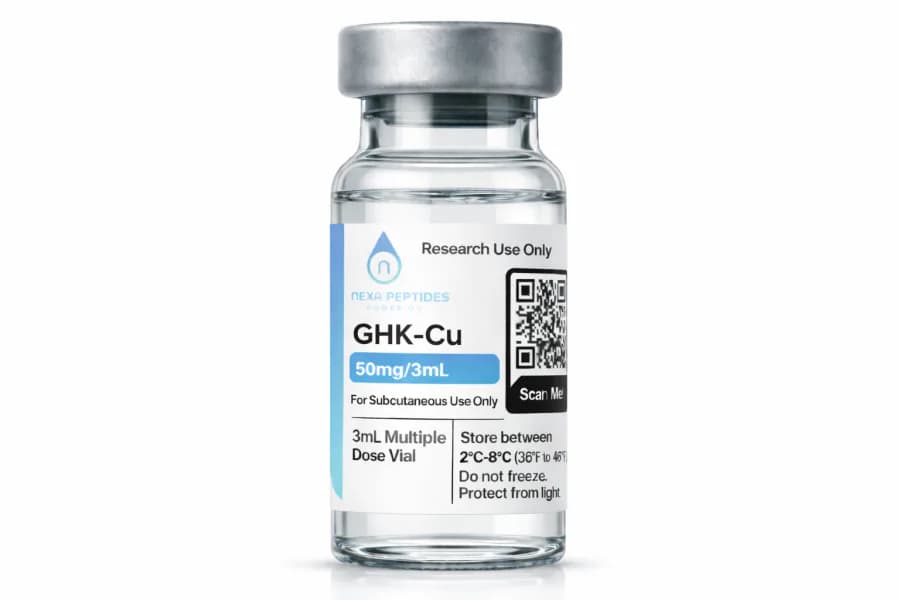
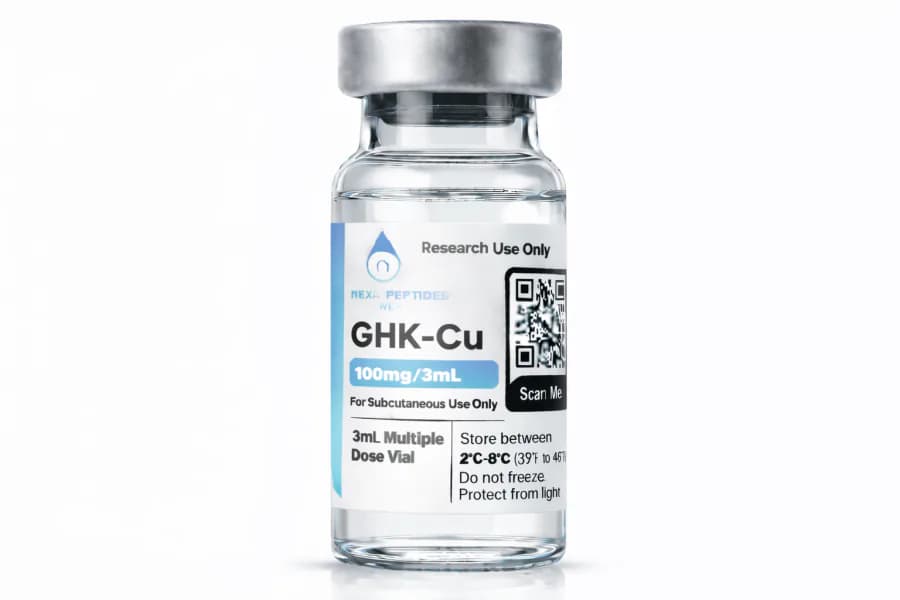
GHK-Cu (Copper Peptide) — GHK-CU 100mg
SKU: NXP-GHK-100
GHK-Cu 100mg lyophilized peptide. A copper-binding tripeptide studied for its interaction with extracellular matrix signaling pathways. For research use only.
Product Details
GHK-Cu (copper tripeptide-1) is a naturally occurring tripeptide with high affinity for copper(II) ions. This 100mg research-grade lyophilized preparation offers an extended supply for laboratories conducting longer-duration or higher-dose studies on copper peptide biology, tissue remodeling mechanisms, and extracellular matrix dynamics.
Published research has investigated GHK-Cu in models of dermal repair, collagen and elastin gene expression, glycosaminoglycan synthesis, and metalloproteinase regulation. Additional studies have explored its role in promoting decorin expression and modulating TGF-beta signaling pathways relevant to fibrosis and scar tissue formation.
Manufactured under cGMP-adjacent conditions with rigorous analytical testing. HPLC purity exceeds 98%, with mass spectrometry confirmation of molecular identity. Full certificate of analysis provided with each lot.
Store lyophilized at -20°C. Reconstituted at 2-8°C, use within 60 days. Avoid repeated freeze-thaw cycles to maintain peptide integrity.
For research and laboratory use only.
About GHK-Cu (Copper Peptide)
GHK-Cu, or Copper Peptide, is a naturally occurring peptide-copper complex first isolated from human plasma. It consists of the tripeptide Glycyl-L-Histidyl-L-Lysine (GHK) chelated with a copper(II) ion. The amino acid sequence is Gly-His-Lys. The affinity of the GHK tripeptide for copper is exceptionally high, and it is this complex that is believed to be the primary biologically active form. In biochemical research, GHK-Cu is notable because its endogenous concentration has been observed to decline significantly with age, correlating with a diminished capacity for tissue regeneration. This observation has spurred extensive investigation into its physiological roles.
The GHK-Cu complex is a pleiotropic signaling molecule, meaning it influences numerous and diverse cellular pathways. Its small size and molecular structure allow it to interact with a wide array of biological targets. Initial research focused on its role in wound healing and tissue remodeling, where it was found to modulate the expression of extracellular matrix (ECM) proteins such as collagen and elastin. Subsequent studies have expanded its research applications to include investigations into its anti-inflammatory, antioxidant, and gene-modulatory effects. This broad spectrum of activity makes GHK-Cu a molecule of significant interest in preclinical studies related to dermatology, regenerative medicine, and cellular senescence.
For researchers, GHK-Cu represents a valuable tool for studying the fundamental mechanisms of tissue repair and homeostasis. Its ability to influence gene expression—reportedly altering the activity of thousands of genes—provides a powerful model for investigating how cellular function can be modulated towards a regenerative state. Laboratory studies often utilize GHK-Cu in cell culture systems (e.g., with fibroblasts, keratinocytes, or stem cells) or in animal models to elucidate its effects on cellular proliferation, differentiation, and ECM dynamics. Nexa Peptides provides high-purity, lyophilized GHK-Cu for these precise research applications, ensuring reliable and reproducible results in a laboratory setting. This product is strictly for research use only and is not intended for human consumption.
Mechanism of Action
The mechanism of action for GHK-Cu is complex and multifaceted, reflecting its ability to interact with numerous cellular components and signaling pathways rather than a single high-affinity receptor. A primary mechanism is its profound influence on gene expression. In vitro studies using microarray and transcriptomic analyses on various cell lines have demonstrated that GHK-Cu can modulate the expression of a substantial portion of the human genome. It has been observed to upregulate genes associated with tissue repair and antioxidant defense while downregulating genes linked to inflammation and fibrosis. This gene-regulatory capacity appears to be central to its observed effects, effectively recalibrating cellular activity towards a state of regeneration and homeostasis.
In the context of tissue remodeling, GHK-Cu exerts dual-modulatory effects on the extracellular matrix (ECM). It stimulates the synthesis of key ECM components, including collagen I and III, elastin, and various glycosaminoglycans (GAGs), by signaling through pathways such as the TGF-β/SMAD cascade. However, unlike pro-fibrotic agents, GHK-Cu also upregulates the activity of matrix metalloproteinases (MMPs) and their inhibitors (TIMPs), facilitating the breakdown of scarred or disorganized collagen. This balanced control over ECM deposition and degradation is critical for its role in promoting healthy tissue architecture rather than fibrotic scar formation. This homeostatic mechanism has been a key focus in wound healing and dermatological research models.
Furthermore, GHK-Cu functions as a critical signaling molecule during injury response. It acts as a chemoattractant, recruiting immune cells like macrophages and mast cells to the site of investigation. It also promotes angiogenesis, the formation of new blood vessels, a process essential for supplying nutrients and oxygen to regenerating tissue. This is achieved, in part, by modulating the expression of pro-angiogenic factors such as Vascular Endothelial Growth Factor (VEGF) and Fibroblast Growth Factor 2 (FGF-2). These actions collectively orchestrate a more efficient and organized repair process in preclinical models.
The copper ion within the complex is integral to its antioxidant and anti-inflammatory activities. GHK-Cu can directly scavenge harmful reactive oxygen species (ROS), thereby mitigating oxidative stress. It also serves as a carrier for copper, an essential cofactor for critical antioxidant enzymes like superoxide dismutase (SOD1). By delivering copper, GHK-Cu can enhance the cell's endogenous antioxidant capacity. Its anti-inflammatory effects are mediated by its ability to suppress the expression and release of pro-inflammatory cytokines, such as Interleukin-6 (IL-6) and Tumor Necrosis Factor-alpha (TNF-α), in various cell culture models. This combination of gene regulation, ECM modulation, and anti-inflammatory signaling underscores the peptide's pleiotropic nature in laboratory investigations.
Research Applications
GHK-Cu is a widely investigated peptide, with its research applications primarily centered on dermatological science, tissue regeneration, and hair follicle biology. In dermatological research, its effects on skin cells are extensively studied. In vitro experiments using human dermal fibroblast cultures are common for quantifying the peptide's impact on the synthesis of collagen, elastin, and other extracellular matrix proteins. These studies often employ techniques like ELISA or Western blotting to measure protein expression and qPCR to analyze gene transcription levels. The goal is to understand the molecular pathways through which GHK-Cu may influence skin structure and integrity.
Preclinical wound healing models, typically in rodents, represent another major area of GHK-Cu research. In these studies, researchers apply GHK-Cu to standardized incisions or excisional wounds and monitor outcomes such as the rate of wound closure, re-epithelialization, granulation tissue formation, and angiogenesis. Histological analysis of healed tissue is used to assess collagen organization and scar morphology, providing insights into the peptide's potential to promote regenerative, rather than fibrotic, repair. These models are crucial for investigating the peptide's coordinated effects on the complex biological cascade of healing.
Research into hair follicle biology has utilized GHK-Cu in both in vitro and ex vivo models. Studies on cultured dermal papilla cells, which are critical for regulating the hair growth cycle, investigate the peptide's influence on cell proliferation and the expression of growth factors like VEGF. Ex vivo studies using dissected hair follicle organ cultures allow researchers to observe the effects of GHK-Cu on the hair cycle itself, particularly its potential to prolong the anagen (growth) phase. These laboratory investigations aim to elucidate the mechanisms by which GHK-Cu might interact with follicular stem cells and signaling pathways.
Beyond skin and hair, the regenerative potential of GHK-Cu is explored in other contexts. Laboratory models of bone fractures, nerve injury, and lung tissue damage have been used to study its systemic or local effects on repair processes. These studies assess parameters like bone density, nerve regeneration markers, and inflammatory cell infiltration. Furthermore, its role as a gene-modulatory agent is a growing field of study. High-throughput screening methods are used to identify the vast network of genes regulated by GHK-Cu in various cell types, providing a foundation for understanding its broad physiological influence in experimental settings. All such applications are strictly for non-human, in-vitro research purposes.
Formulation & Handling
For optimal stability and integrity, lyophilized GHK-Cu (Copper Peptide) should be stored in a freezer at or below -20°C, protected from direct light. This ensures the long-term preservation of the peptide's structure and activity prior to reconstitution. When preparing for an experiment, the vial should be allowed to equilibrate to room temperature before opening to prevent condensation, which can degrade the lyophilized powder.
Reconstitution should be performed using sterile, high-purity solvents under aseptic laboratory conditions. The recommended reconstitution solvent is bacteriostatic water for injection, which contains 0.9% benzyl alcohol as a preservative to inhibit microbial growth. To reconstitute, slowly inject the desired volume of solvent down the side of the vial, avoiding direct streams onto the powder. Gently swirl or roll the vial to dissolve the peptide completely; do not shake vigorously, as this can cause aggregation or degradation. The final concentration will depend on the specific requirements of the research protocol.
Once reconstituted, the GHK-Cu solution should be stored refrigerated at 2°C to 8°C and is typically stable for several weeks. For long-term studies or to prevent degradation from repeated freeze-thaw cycles, it is best practice to aliquot the freshly reconstituted solution into single-use volumes and store them frozen at -20°C or colder. When needed, a single aliquot can be thawed for use. Proper handling, including the use of sterile syringes and personal protective equipment, is essential to maintain the purity and integrity of the peptide for research applications.
Quality Standards
At Nexa Peptides, we are committed to providing researchers with GHK-Cu (Copper Peptide) of the highest possible quality and purity to ensure the validity and reproducibility of experimental results. Every batch of our GHK-Cu is subjected to a rigorous quality control process. We guarantee a purity level exceeding 99%, which is verified through High-Performance Liquid Chromatography (HPLC). The HPLC analysis provides a detailed chromatogram that quantifies the peptide's purity and identifies any minor impurities.
To confirm the identity and structural integrity of the peptide, each lot undergoes Mass Spectrometry (MS) analysis. This technique verifies that the molecular weight of the synthesized peptide matches its theoretical mass, ensuring the correct amino acid sequence and copper chelation. Furthermore, our GHK-Cu is tested for potential contaminants, including endotoxins, to ensure its suitability for sensitive in vitro applications such as cell culture experiments.
Our GHK-Cu is synthesized in the USA in a cGMP (Current Good Manufacturing Practice) compliant facility, adhering to stringent manufacturing protocols. This ensures consistency, safety, and quality from synthesis to lyophilization. To provide full transparency to our research clients, a comprehensive Certificate of Analysis (COA) is available for every batch. This document includes the specific results from third-party HPLC and MS analyses, along with the batch number and manufacturing date, enabling complete lot traceability and confidence in your research materials.
Frequently Asked Questions
What is GHK-Cu (Copper Peptide)?
How is GHK-Cu (Copper Peptide) synthesized?
What is the molecular weight of GHK-Cu (Copper Peptide)?
What research areas use GHK-Cu (Copper Peptide)?
How should GHK-Cu (Copper Peptide) be stored?
How should GHK-Cu (Copper Peptide) be reconstituted for research?
What purity grade is Nexa Peptides' GHK-Cu (Copper Peptide)?
Is GHK-Cu (Copper Peptide) available with a Certificate of Analysis?
Explore Related Research
Customer Reviews
1 review
RafaelApr 7, 2026
10/10 took my skin and hair to the next level, it’s amazing, one of my favorite