
Skin & Hair
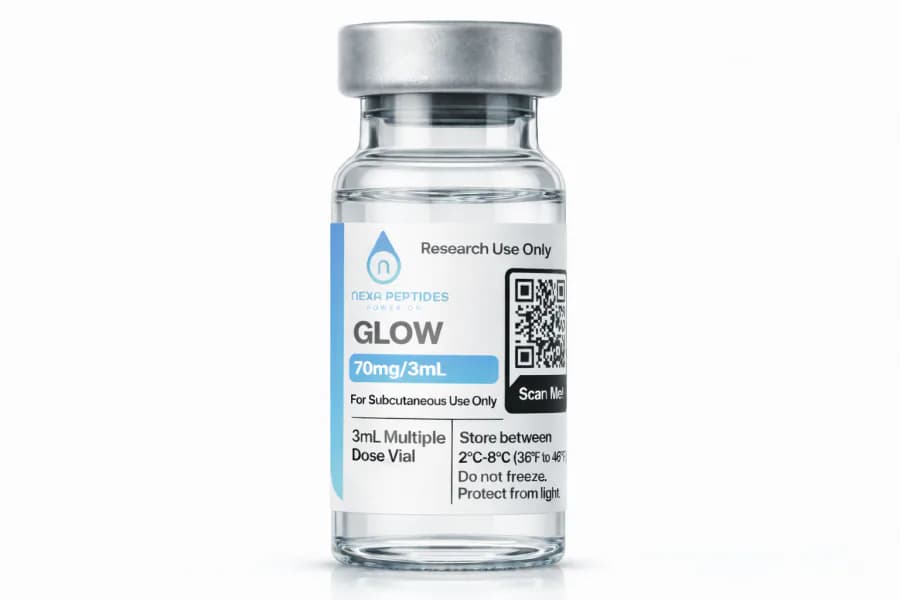
Glow (GHK-Cu/AHK-Cu Blend) — Glow 70mg
SKU: NXP-GLOW-70
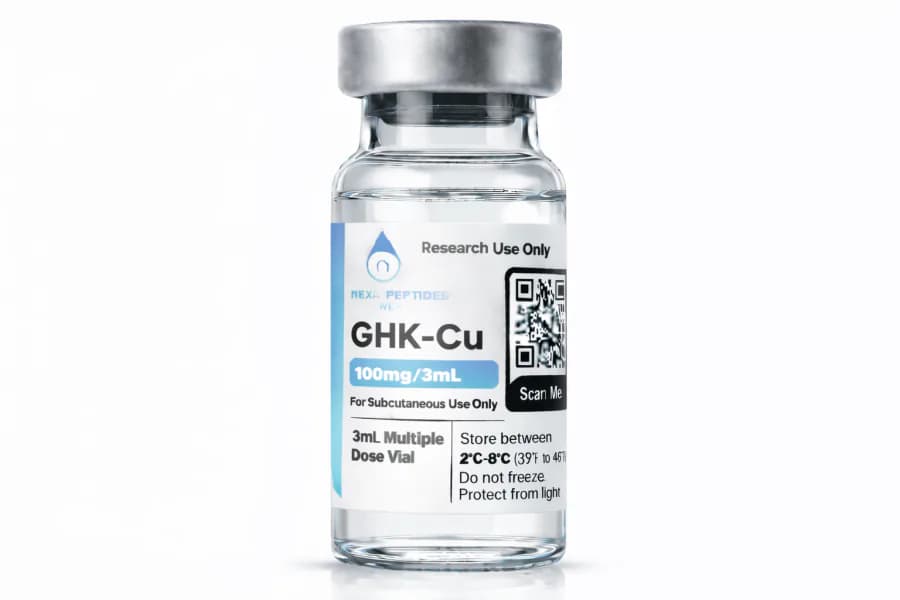
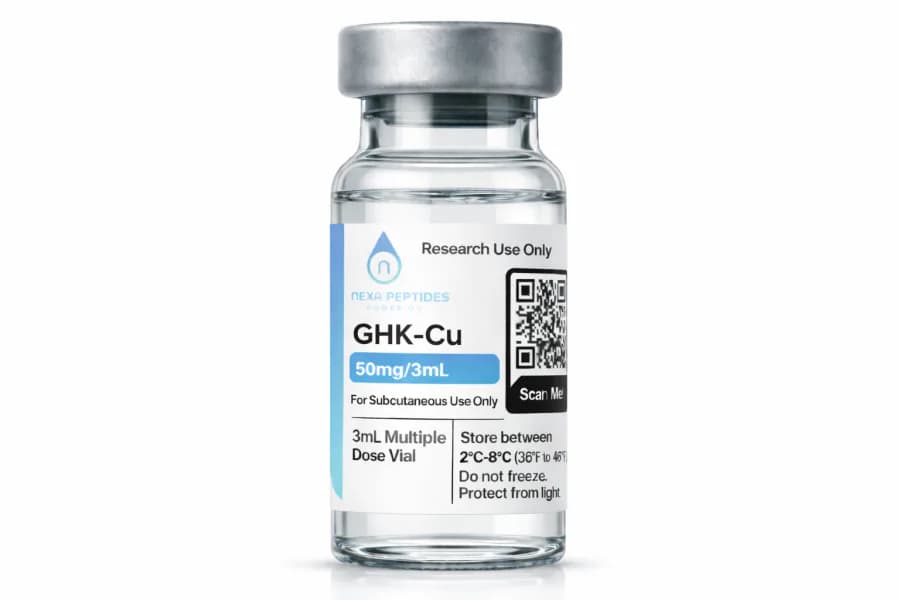
Peptide stack combining GHK-Cu 50mg, TB-500 10mg, and BPC-157 10mg. Studied for hair, nails, skin, collagen, injury repair, and tissue regeneration. For research use only.
Product Details
Glow is a 70mg multi-peptide research blend formulated to support laboratory investigations into skin biology, hair follicle dynamics, and tissue recovery pathways. This combination preparation brings together complementary peptide sequences targeting overlapping regenerative signaling cascades for synergistic study designs.
Researchers have utilized multi-peptide blends to examine combinatorial effects on fibroblast growth factor expression, keratinocyte migration, collagen type I and III ratios, and antioxidant defense enzyme upregulation. The blend format allows investigation of peptide interactions that single-agent studies may not capture.
Each vial is manufactured under strict quality-control protocols with HPLC purity verification for each component peptide. Batch-tested for sterility, endotoxin levels, and peptide content to ensure reproducible results across experimental series.
Store lyophilized at -20°C. Reconstituted at 2-8°C, use within 60 days. Avoid repeated freeze-thaw cycles to maintain peptide integrity.
For research and laboratory use only.
About Glow (GHK-Cu/AHK-Cu Blend)
Glow (GHK-Cu/AHK-Cu Blend) is a specialized formulation combining two well-characterized copper-binding tripeptides: Glycyl-L-histidyl-L-lysine (GHK-Cu) and L-Alanyl-L-histidyl-L-lysine (AHK-Cu). This blend is provided for laboratory investigation into the potential synergistic or complementary biochemical activities of these structurally similar molecules. GHK is a naturally occurring tripeptide found in human plasma, saliva, and urine, with concentrations known to decline significantly with age. Its high affinity for copper(II) ions allows it to form the GHK-Cu complex, a molecule central to numerous cellular processes.
AHK-Cu is a synthetic analog of GHK-Cu, differing by the substitution of a glycine residue with an alanine residue. This subtle structural modification is of interest to researchers studying its differential effects on cellular targets, particularly within the context of hair follicle biology and dermal fibroblast activity. Both peptides are extensively studied for their roles in modulating extracellular matrix (ECM) synthesis and remodeling. Research models suggest they influence the expression of collagen, elastin, proteoglycans, and glycosaminoglycans, which are critical structural components of connective tissues.
The rationale for combining these two peptides in a single research formulation is to provide a tool for investigating complex biological systems where multiple signaling pathways may be involved. Researchers can utilize this blend to explore potential additive or synergistic effects on gene expression, wound healing cascades, and cellular proliferation in various in vitro and ex vivo models. The blend allows for the study of a broader range of cellular responses than either peptide might elicit alone, making it a valuable compound for advanced dermatological and trichological research.
Nexa Peptides supplies Glow (GHK-Cu/AHK-Cu Blend) as a high-purity lyophilized powder, ensuring stability and accurate reconstitution for precise experimental design. This product is strictly intended for laboratory research applications and is not for human or veterinary use. Its availability supports preclinical investigations into the fundamental mechanisms of tissue repair, regeneration, and cellular homeostasis.
Mechanism of Action
The mechanism of action for the Glow blend is multifaceted, stemming from the distinct yet overlapping biochemical activities of its two components, GHK-Cu and AHK-Cu. The central mechanism for both peptides involves their ability to chelate and deliver copper(II) ions, a critical cofactor for numerous enzymes involved in cellular metabolism, antioxidant defense, and ECM synthesis.
GHK-Cu is recognized as a potent modulator of gene expression. In vitro studies using microarray analysis have demonstrated its capacity to alter the expression of thousands of human genes, effectively resetting cellular gene expression profiles towards a state associated with regeneration and repair. It is known to upregulate genes associated with collagen and elastin synthesis while downregulating those involved in their degradation, such as certain matrix metalloproteinases (MMPs). This gene-modulating activity is key to its observed effects in models of wound healing and tissue remodeling. GHK-Cu signaling can stimulate the synthesis of decorin, a proteoglycan that plays a crucial role in collagen fibril organization and wound healing regulation. Furthermore, GHK-Cu has been shown to enhance the proliferation of keratinocytes and increase the expression of integrins, facilitating cell adhesion and migration during re-epithelialization in wound models.
In inflammatory contexts, GHK-Cu exhibits regulatory properties. It has been observed in laboratory studies to suppress the expression of pro-inflammatory cytokines such as TNF-alpha and IL-6. Its antioxidant mechanism is twofold: it can directly scavenge reactive oxygen species (ROS) and also upregulate the expression of endogenous antioxidant enzymes, most notably superoxide dismutase (SOD), for which copper is an essential cofactor. This dual action helps mitigate oxidative stress, a key factor in cellular damage and aging processes investigated in research settings.
AHK-Cu shares a similar copper-binding motif and is believed to operate through related pathways. However, its structural difference—the replacement of glycine with alanine—may alter its receptor affinity, stability, or specific downstream effects. Research involving AHK-Cu often focuses on its influence on hair follicle biology. It is investigated for its potential to stimulate the proliferation of dermal papilla cells, which are critical for regulating the hair growth cycle. The proposed mechanism involves the promotion of the anagen (growth) phase of the hair follicle and the potential modulation of local growth factors like Vascular Endothelial Growth Factor (VEGF), which is essential for perifollicular vascularization.
The combined formulation allows researchers to investigate the interplay between these mechanisms. For instance, the broad gene-regulatory and ECM-remodeling effects of GHK-Cu could potentially create a more favorable microenvironment for the hair follicle-specific activities of AHK-Cu. The blend enables the study of a more comprehensive approach to stimulating regenerative pathways in complex biological systems, such as skin and hair follicle explant models. This product is for in vitro research use only.
Research Applications
The Glow (GHK-Cu/AHK-Cu Blend) is a specialized chemical compound intended for a range of preclinical research applications, primarily in the fields of dermatology, tissue engineering, and trichology. Its utility lies in the investigation of cellular repair, regeneration, and homeostasis in various laboratory models.
One primary area of investigation is wound healing. Researchers utilize GHK-Cu and its analogs in both in vitro and in vivo models to study the complex cascade of tissue repair. In vitro, the peptides are applied to cell cultures of human dermal fibroblasts and keratinocytes to quantify their effects on cell proliferation, migration, and the synthesis of ECM components like collagen I and III, elastin, and fibronectin. These studies often employ techniques such as RT-qPCR to measure gene expression and ELISA or Western blotting to quantify protein levels. In animal models, such as full-thickness dermal wound models in rodents, the topical application of these peptides is studied to assess effects on wound closure rates, re-epithelialization, angiogenesis, and the quality of scar tissue formation.
In the field of cosmetic science and dermatological research, this blend is used to explore mechanisms related to skin aging. Studies focus on its ability to stimulate the production of structural proteins that decline with age. Ex vivo human skin models are often employed to examine the peptides' effects on skin thickness, elasticity, and hydration markers. The antioxidant properties of copper peptides are also a significant research focus, with studies designed to measure their capacity to protect cultured skin cells from damage induced by UV radiation or other oxidative stressors.
Another significant application is in the study of hair follicle biology. The blend, particularly due to its AHK-Cu component, is used in research on hair growth cycles. In vitro studies with cultured human hair dermal papilla cells (HHDPCs) investigate the peptides' influence on cell proliferation and the expression of key growth factors. Ex vivo studies using dissected hair follicles maintained in culture allow for direct observation of the peptides' effects on hair shaft elongation and the transition between telogen (resting) and anagen (growth) phases. Animal models, such as the C57BL/6 mouse model, are used to study these effects in a whole-organism context, assessing changes in hair density and follicle morphology.
Finally, the gene-regulatory capabilities of GHK-Cu make this blend a tool for broader investigations into cellular reprogramming and regeneration. Advanced research applications include using genomic and proteomic approaches to map the global changes in cellular signaling pathways induced by the peptides. These fundamental studies aim to elucidate the core mechanisms by which small peptides can influence complex cellular behaviors, providing foundational knowledge for future research in regenerative science. All applications of this product are strictly for laboratory and research purposes.
Formulation & Handling
Glow (GHK-Cu/AHK-Cu Blend) is supplied as a lyophilized powder to ensure maximum stability and shelf-life. For long-term storage, the unopened vial should be stored in a freezer at or below -20°C, protected from light. For short-term storage of a few weeks, the lyophilized product may be kept refrigerated at 2-8°C.
Reconstitution should be performed under sterile conditions. The recommended solvent for research applications is sterile bacteriostatic water, which contains 0.9% benzyl alcohol as a preservative, allowing for multiple withdrawals from the same vial. To reconstitute, slowly inject the desired volume of bacteriostatic water into the vial, aiming the stream against the glass wall to avoid foaming. Gently swirl or roll the vial to dissolve the powder completely; do not shake vigorously, as this can denature the peptides.
Once reconstituted, the solution should be stored refrigerated at 2-8°C. The stability of the reconstituted peptide in solution is typically several weeks under these conditions. For extended research protocols, it is best practice to aliquot the reconstituted solution into single-use, sterile vials and store them frozen at -20°C. This practice minimizes the risk of contamination and prevents degradation from repeated freeze-thaw cycles. Always use appropriate personal protective equipment, including gloves and safety glasses, when handling and preparing the peptide solution.
Quality Standards
At Nexa Peptides, we are committed to providing researchers with compounds of the highest possible quality and purity to ensure the validity and reproducibility of experimental results. Our Glow (GHK-Cu/AHK-Cu Blend) is synthesized and purified in a state-of-the-art laboratory facility operating under cGMP (Current Good Manufacturing Practices) guidelines.
Each batch of Glow undergoes rigorous quality control testing. Purity is assessed using High-Performance Liquid Chromatography (HPLC), with every lot guaranteed to be greater than 99% pure. The identity and molecular weight of the constituent peptides are confirmed using Mass Spectrometry (MS) to ensure the correct primary structure. Furthermore, each batch is tested for the presence of endotoxins to ensure its suitability for sensitive in vitro applications, including cell culture experiments.
To provide complete transparency and confidence to our research clients, a third-party Certificate of Analysis (COA) is available for every product batch. This document provides detailed results from the HPLC and MS analyses, confirming the purity and identity of the compound. All our products feature lot-specific tracking, ensuring full traceability from synthesis to final delivery. This stringent commitment to quality control ensures that the Glow (GHK-Cu/AHK-Cu Blend) you receive from Nexa Peptides is a reliable and consistent tool for your laboratory research.
Frequently Asked Questions
What is Glow (GHK-Cu/AHK-Cu Blend)?
How is Glow (GHK-Cu/AHK-Cu Blend) synthesized?
What is the molecular weight of Glow (GHK-Cu/AHK-Cu Blend)?
What research areas use Glow (GHK-Cu/AHK-Cu Blend)?
How should Glow (GHK-Cu/AHK-Cu Blend) be stored?
How should Glow (GHK-Cu/AHK-Cu Blend) be reconstituted for research?
What purity grade is Nexa Peptides' Glow (GHK-Cu/AHK-Cu Blend)?
Is Glow (GHK-Cu/AHK-Cu Blend) available with a Certificate of Analysis?
Explore Related Research
Customer Reviews
0 reviews
No reviews yet. Be the first to review this product!